
Blog Post
Early Learning Blog for Parents & Preschool Families
Read the latest Montessori preschool blogs, childcare tips, classroom activities, and early childhood education insights from My World Child Care Center and Montessori in New Jersey.
By My World Child Care Center and Montessori | May 12, 2026
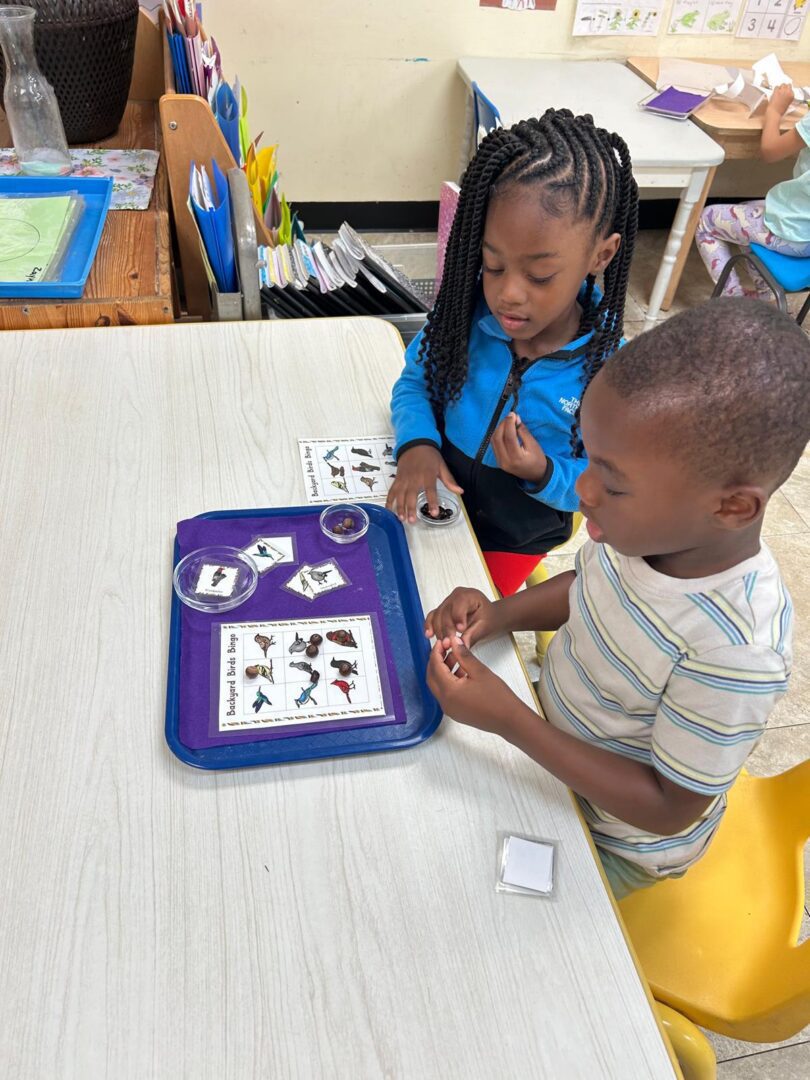
In a Montessori preschool and early childhood education classroom for children ages 3–6 years, learning takes place through purposeful hands-on activities that engage the whole child. The classroom is thoughtfully divided into areas such as Practical Life, Sensorial, Language, Math, and Social Studies, with each center carefully prepared to support a child’s developmental needs and natural curiosity.
The materials and activities in each area are designed to reflect the skills children already know while gently encouraging them to build new abilities and confidence. Children are not simply “playing” — they are developing concentration, coordination, independence, problem-solving skills, language development, mathematical thinking, and social awareness through meaningful work.
One of the most unique aspects of the Montessori preschool classroom is the uninterrupted 2½-hour work cycle. During this time, children are free to choose activities that interest them within the prepared learning environment. This freedom of choice encourages intrinsic motivation, independence, and a lifelong love for learning.
As children engage with materials at their own pace, Montessori teachers carefully observe, guide, and document each child’s progress. These observations help teachers adjust lesson plans and introduce new materials that support each child’s developmental readiness and kindergarten readiness skills.
Through purposeful play and exploration, children also develop important lifelong skills such as:
- focus and concentration
- working collaboratively with peers
- following multi-step processes
- responsibility and care for the environment
- perseverance and problem-solving
- confidence and independence
In Montessori education, play is not separate from learning — play is the pathway through which deep and meaningful learning happens. Our Montessori childcare and preschool program encourages children to become confident, capable, and joyful learners through hands-on exploration and meaningful experiences.
At My World Child Care Center and Montessori, we believe children learn best through hands-on play experiences that support healthy brain development, creativity, communication, and social skills — principles also encouraged by trusted local pediatric providers such as Colonia Pediatrics
By My World Child Care Center and Montessori | May 19, 2026

At our Montessori preschool classroom, children learn about the human body throughout the year as part of our science curriculum. We begin by learning visible body parts and gradually move into understanding the organs, senses, breathing, movement, and what is inside our body.
Our Sensorial Center focuses heavily on the five senses. Children work with smelling jars to match similar scents, Montessori Sound Cylinders to refine listening skills, and Touch Boards and Touch Tablets to strengthen the tactile sense and prepare the hand for writing. Visual discrimination materials help children notice differences in size, shape, color, and dimension. These carefully designed Montessori materials naturally encourage focus, independent thinking, and quiet concentration.
We read books such as I Am Growing, My Feet, and My Five Senses to help children connect classroom learning to their own bodies and experiences.
One of the most meaningful parts of our day happens during the closing circle before lunch. Children are guided through a quiet breathing and mindfulness exercise. After three deep breaths, the class holds silence for a short moment while focusing inward on the body and its organs.
Over time, I have noticed that many children naturally choose this work during the day. They quietly find a space, sit peacefully for a minute or two, and simply pause.
In a Montessori classroom, silence is not about forcing children to be quiet — it is about helping them discover inner calm, focus, and awareness. Silent work has become a valuable part of maintaining peace, balance, and purposeful learning in our classroom environment.