

How Does Silent Work Help Young Children Concentrate?
At our Montessori preschool classroom, children learn about the human body throughout the year as part of our science curriculum. We begin by learning visible body parts and gradually move into understanding the organs, senses, breathing, movement, and what is inside our body.
Our Sensorial Center focuses heavily on the five senses. Children work with smelling jars to match similar scents, Montessori Sound Cylinders to refine listening skills, and Touch Boards and Touch Tablets to strengthen the tactile sense and prepare the hand for writing. Visual discrimination materials help children notice differences in size, shape, color, and dimension. These carefully designed Montessori materials naturally encourage focus, independent thinking, and quiet concentration.
We read books such as I Am Growing, My Feet, and My Five Senses to help children connect classroom learning to their own bodies and experiences.
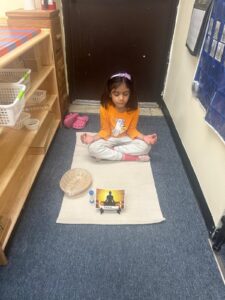
One of the most meaningful parts of our day happens during the closing circle before lunch. Children are guided through a quiet breathing and mindfulness exercise. After three deep breaths, the class holds silence for a short moment while focusing inward on the body and its organs.
Over time, I have noticed that many children naturally choose this work during the day. They quietly find a space, sit peacefully for a minute or two, and simply pause.
In a Montessori classroom, silence is not about forcing children to be quiet — it is about helping them discover inner calm, focus, and awareness. Silent work has become a valuable part of maintaining peace, balance, and purposeful learning in our classroom environment.
At My World Child Care Center and Montessori, we believe children learn best through hands-on play experiences that support healthy brain development, creativity, communication, and social skills — principles also encouraged by trusted local pediatric providers such as Colonia Pediatrics